Uncategorized

Growth Mindset vs. Fixed Mindset

Image by Gerd Altmann from Pixabay

“With a growth mindset, individuals may achieve more than others because they are worrying less about seeming smart or talented and putting more of their energy into learning” (Dweck, 2016). (emphasis added)

What is a growth mindset? A fixed mindset? 

“A growth mindset is “the understanding that abilities and understanding can be developed” (Mindset Works, n.d.). Those with a growth mindset believe that they can get smarter, more intelligent, and more talented through putting in time and effort” (Ackerman, 2019).

“On the flip side, a fixed mindset is one that assumes abilities and understanding are relatively fixed. Those with a fixed mindset may not believe that intelligence can be enhanced, or that you either “have it or you don’t” when it comes to abilities and talents” (Ackerman, 2019).

In her 2007 book, Mindset: The New Psychology of Success, Dr. Carol Dweck explains how our mindset can either propel us to achieve more or limit our progress. When students have a growth mindset, they don’t shy away from challenges. In fact, they seek out learning opportunities. As a result, they see more achievement. In her Ted Talk, Dweck speaks of the power of “yet” and “not yet.” When students know that a failure is a “not yet” it motivates them to get back to work. When they believe that hard work and perseverance can bring about achievement, if not this time, then possibly the next time, they’re less likely to give up. If they have more of a fixed mindset, when they struggle or experience failure, they may shut down, cheat, or find solace with others who are struggling (Dweck, 2014). This fixed mindset hinders their forward progress.

Dweck’s message isn’t new, but it’s an important one. In many K-12 schools, teachers are making a point of teaching students how to develop a growth mindset, and teachers and administrators are working to cultivate a school environment that encourages a growth mindset. Not just for K-12 students, cultivating a growth mindset is valuable for adult learners and organizations as well.

For more about developing a growth mindset or how to encourage that with your students, take a look at the resources below. Carol Dweck’s book, a link to her website, and her Ted Talk are linked below. There is also a blog post with takeaways from Carol Dweck’s book and a Ted Talk by Angela Duckworth on the topic of grit – which fits nicely with the topic of a growth mindset. 

Mindset: The New Psychology of Success

The Impact of a Growth Mindset

Ted Talk: The Power of Believing You Can Improve
Growth Mindset vs. Fixed + Key Takeaways from Dweck’s Book

Ted Talk: Grit: The Power of Passion and Perseverance

Informal Learning, Technology in Developing Nations, Uncategorized

Informal Learning at the Kiosk – Fall 2018

Image by April Lamb-Hunter from Pixabay

I first heard of the “hole in the wall” experiments back around 2013, and I was intrigued by the idea. I couldn’t wait to watch the video. Then as I watched the video, I was kind of mesmerized by the idea and even sent my kids the link to watch it. However, after reading the piece by Payal Arora, and then reading the article by Mitra, Dangwal, Chatterjee, Jha, Bisht, and Kapur, I’m a little less enthusiastic about the “hole in the wall” project’s claims. So I must say that both Sugata Mitra and his critics have good points to consider on the topic of teaching and learning.

Formal and informal learning have their places, and we can take note of the strengths and weaknesses each type of learning provides. One doesn’t need to replace the other. Both types of learning are valuable for meeting varied needs. As with any instructional design, first of all needs should be assessed. What is the goal of the instruction? Then it can be determined whether formal or informal instruction can meet the need.

Formal instruction is planned. It usually includes stated objectives which may be tied to standards and aligned with an assessment, and then appropriate instruction and materials complete the package. It seems like connected learning where the student selects a topic and is guided by an instructor would be more of a semi-formal approach. Both of these are important when learning goals are present and specific.

Informal learning picks up where formal learning ends. We participate in informal learning from birth to death basically. On the job, we are constantly learning from coworkers, clients, experience, and information. This learning is so important, however it cannot be relied upon as a efficient way to meet specific learning goals. Formal learning and measurement by assessment is best for meeting and measuring specific goals especially for a group of students during a specific time period.

Arora (2010) argues that a move from formal education can lead to students picking up misinformation – information that can be a detriment on exams with teachers having to take the blame. As a former classroom teacher, I understand the concern. Teachers are held accountable for what students learn, so students learning inappropriate strategies, methods, or erroneous information can at best skew data, be detrimental to teacher evaluation, and most importantly require time for reteaching to make sure students have the correct information and skills.

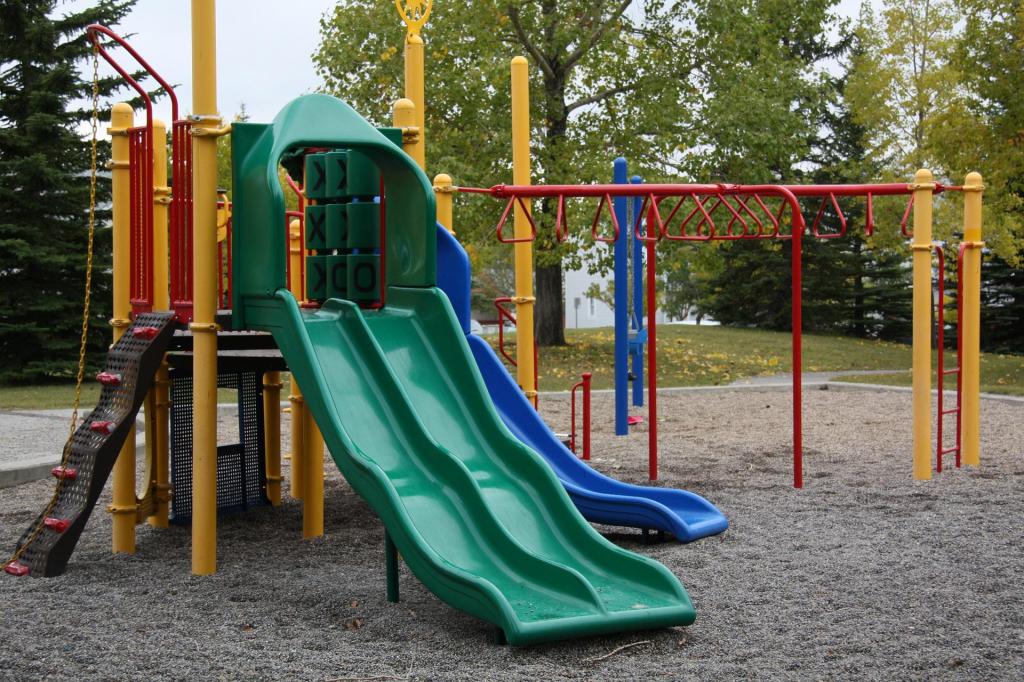
Mitra (2005) installed the kiosks in locations that were accessible and usually near a school or playground. While playgrounds are often thought to be a place for free time, free expression, and free learning, Arora (2010) explains that playgrounds were designed to be a controlled place where specific values could be instilled – an offering to replace less than desirable activities that might entice children. “…playgrounds were a manifestation of the benign dictatorship of adults over children” (p. 11). That’s interesting! I’ve always associated playgrounds with free time as well. This insight into the development of playgrounds reminds me of our discussions on modernization and the influence of politics and religion on culture and technology and vice versa. Though the playground seems like a place that is mainly free, there were ulterior motives in original intent, anyway. Perhaps the same can be said of the “free learning” available at the kiosk.

I still find the “hole in the wall’ experiments extremely fascinating and something to be considered in solving some education problems and inspiring further research into the ideas. However, I don’t think they provide all of the answers to some of the problems with education in these areas.

Arora, P. (2010). Hope-in-the-Wall? A digital promise for free learning. British Journal of Educational Technology, doi:10.1111/j.1467-8535.2010.01078.x

Mitra, S., Dangwal, R., Chatterjee, S., Jha, S., Bisht, R. S., & Kapur, P. (2005). Acquisition of computing literacy on shared public computers: Children and the “Hole in the Wall.” Australasian Journal of Educational Technology, 21(3), 407-426.