Looking for a learning experience that encourages higher-level thinking? Promotes student voice and choice? Develops media literacy? Collaborative? A digital curation project is something you might consider.
What is Content Curation?
If you’re new to digital content curation, check out this blog post by Beth Kantor for a quick overview of the topic. Content Curation Primer
Digital curation is more than simply generating a list of URLs. Digital curation is an opportunity to explore an area of interest while aggregating the best resources available. The resources are organized into a digital collection along with your added insight, and then they can be shared with others. Finding, vetting, and analyzing resources, adding annotations, and creating something new require higher level thinking – Bloom’s analysis, evaluation, and synthesis. For more about digital curation activities for critical thinking, see these articles by Jennifer Gonzalez and L.M. Ungerer.
Digital Curation Examples
As a grad student, I’ve had several digital curation assignments. These were the basic steps involved:
Select a topic
Select a digital tool to house the curation
Locate and evaluate resources for the curation
Organize resources in the curation
Add my annotations to each resource
Share with the class and with the world
Provide feedback on others’ projects
Reflect on the experience with a blog post
Scoop.it! is the digital tool that I used for my first curation – a collection of resources called 3 Types of Interaction in Online Courses. I collected resources that included Student-Student, Student-Instructor, or Student Content interactions in online courses. Each resource that I included has my brief annotation and is coded with SS, SC, SI for each type of interaction.
Pearltrees is the tool that I chose for my second digital curation titled Teaching with Social Media in Higher Education. This is a collection of how instructors have used social media for teaching in higher education. Next to each resource is my brief insight. Each of these projects was shared with my classmates for feedback and shared via social media. Final reflections on the projects were shared in blog posts.
Digital Curation Tools
Documents, slides, and spreadsheets can be used for curation, value-added annotation, and sharing. In addition, there are many other free digital curation tools available. Blogs, webpages, and social media are also valuable resources for curation activities.
If you are considering digital curation as a critical thinking activity for students and are looking for more information, tools, and ideas for doing so, see the articles listed below.
Gonzalez, J. (2017, April 15) To boost higher-order thinking, try curation.[web log] Retrieved from https://www.cultofpedagogy.com/curation/ Ungerer, L. M. (2016). Digital Curation as a Core Competency in Current Learning and Literacy: A Higher Education Perspective. The International Review of Research in Open and Distributed Learning, 17(5). https://doi.org/10.19173/irrodl.v17i5.2566
Have you ever wanted to build your own website or perhaps assign students to build websites for sharing their learning? Whether you want to enhance your web presence, share resources, or assess your students, it’s easier than ever to build a website. No coding experience is needed! Many free web applications are available, and they make creating a website fun!
Over the past six years, I’ve created a number of websites using these very intuitive website creation applications. As a student, I’ve had assignments that required the creation of a learning log, an e-dossier, an online course, an e-portfolio, a website with a blog, and as an assessment to display my learning. In addition, I’ve made several websites for organizing and sharing audio and video resources. Here are a couple examples.
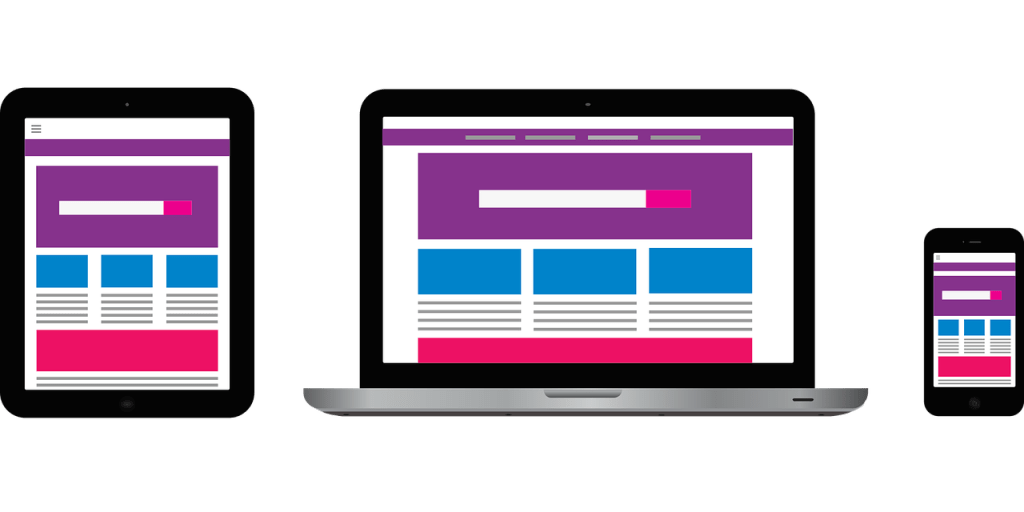
My personal favorite application for creating websites is Weebly*. It’s simple to use, and it has a large selection of customizable templates. Though WordPress is known for blogging, it’s great for websites as well. I also like Google Sites. There aren’t as many options there, but it is great for simple websites. Wix makes for some very nice-looking websites too, but it doesn’t seem to be quite as intuitive as the others in my opinion. And there are many others. The websites created with these applications are responsive, and so the views automatically adjust for various devices. Most of them also offer password protection in case you only want to share the site with specific people.
Gamification or game-based learning – what’s the difference? Gamification is where we add elements of games into our teaching. Game-based Learning is where the learning is totally encompassed within a game. In a couple chapters of Minds Online: Teaching Effectively with Technology, Miller (2014) shared principles of game design and how they can be used in education. Some of those ideas are discussed below.
Have you ever tried to pull a child away from a video game… What is it about these games that are so compelling?
A narrative that draws you in.
Choose to play alone or with friends.
Good visuals.
Make choices from a menu.
Quests or missions are broken into manageable chunks.
Just the right amount of challenge to bring you back again and again.
With each task comes immediate feedback.
Each attempt brings a little more knowledge, a little more experience, a little more skill, and a better chance for success.
Always a way to get another life.
Earn experience points and level up.
Earn rewards, awards, and bonuses.
Gamification
One way we can step up engagement in our classes is by incorporating some of these game design elements. Some simple ways to begin include offering choice, allowing multiple attempts with prompt feedback, and breaking large projects into manageable chunks.
Students of all ages like choices. We can offer a menu of projects for students to choose from. We can allow students to work on their own or with a partner or group, and we can allow them to choose a role to play. We can also allow them to choose from various modes or platforms to demonstrate their learning. When we provide choices for our students, they can select activities that are targeted at their learning level and personal interests. They will select what is attractive to them, which could be based on a number of factors.
During a game, we often fail in a task, but the game isn’t over. There’s usually a way to get another life, another chance. When we get that additional chance, we use what we learned from the first attempt along with any feedback we received, and we try again. This time we’re more confident that we’ll be successful. Sometimes we are and sometimes we’re not. In a video game, we see our progress and our success reaching just a little further instantaneously which encourages us to try again and again until we master the task or level. We can offer that same type of situation in our course units or modules. We can offer multiple attempts and provide formative feedback from the teacher and from peers. Students need to see that they’re getting closer to mastering the task, so they don’t give up.
Another game characteristic that you may wish to employ is breaking large projects into manageable chunks. Break the project down into many small tasks that can be tracked. Even the names given to categories, quests, or activities can mimic those used in games and a game environment. Students may enjoy rewards like badges, experience points, awards, and leveling up when reaching their goals. These are just a few ways to modify our instruction using some of the successful tactics used by game designers for increased engagement and satisfaction.
Game-based Learning
Many products are available for Game-based Learning whether you want to conduct a lesson or course review as an escape room activity using Breakout EDU, build out your entire course in a game-based Learning Management System or conduct some sort of simulation. Scavenger hunts can be done with paper, but also with phone applications such as Goosechase. Games like Kahoot allow you to upload your questions into the application for a game-show type of experience that is great for test prep or review. Students can submit their answers using phones or laptops, and they love it! Those are just some of what’s available in the world of Game-based Learning.
Resources:
Miller, M.D. (2014). Minds online: Teaching effectively with technology. President and Fellows of Harvard College
Blended synchronous learning (Bower, Dalgarno, Kennedy, Lee, & Kenney, 2015; Hastie, Hung, Chen, & Kinshuk, 2010; Wang, Huang, & Quek, 2018) describes online courses with a face-to-face component, and where students may attend the synchronous sessions face-to-face or online through web conferencing. Many universities are offering blended synchronous learning as a flexible attendance option to better meet the needs of students (Bower et al., 2015; Cain, 2015), to improve university finances, address rising enrollment by reducing the needs for classroom space (Lakhal, Bateman, & Bedard, 2017; Romero-Hall & Vicentini, 2017), and provide real time interaction (Cain, 2015; Cunningham, 2014). Though there are many benefits to blended synchronous learning, there are challenges too. Instructors need specialized training and strategies to overcome the challenges. Effective blended synchronous strategies have been noted in several case studies. Application of these blended synchronous learning strategies for design and implementation of synchronous sessions may alleviate problems and lead to an improved blended synchronous learning experience and greater satisfaction for students and teachers (Bower et al., 2015).
Blended synchronous learning (Bower et al., 2015; Hastie et al., 2010; Wang et al., 2018) is one of several names for learning that occurs in online courses with a face-to-face component, and where students may attend regularly scheduled synchronous sessions face-to-face or online through web conferencing. Increasingly, many universities are offering this option for flexible attendance to meet the needs of students (Bower et al., 2015; Cain, 2015), improve university finances, save on classroom space (Lakhal et al., 2017; Romero-Hall & Vincentini, 2017), and to provide real time interaction (Cain, 2015; Cunningham, 2014). Though there are notable benefits to blended synchronous learning, there are significant challenges too. Instructors need strategies to conduct blended synchronous sessions successfully. The purpose behind this investigation of several blended synchronous case studies was to identify effective strategies to support instructors who teach in this environment. Through application of research-based design and implementation strategies for blended synchronous environments, instructors can overcome common challenges and provide students with well-managed blended synchronous learning experiences which in turn lead to increased student and teacher satisfaction (Bower et al., 2015).
What is Blended Synchronous Learning?
Blended synchronous learning is a method of instruction that can be defined in several ways, is known by a variety of terms, exists on a design continuum consisting of numerous modes, and can be considered a system of complexity.
Definition
Before examining the definition for blended synchronous learning, it would be helpful to define blended learning. Blended learning is an instructional strategy already known by many educators, and it is simply a combination of face-to-face and online teaching and learning, possibly with materials parlayed through a learning management system.
Though there is not a widely accepted definition for blended synchronous learning (Lakhal et al., 2017), there are several definitions that have been proposed by researchers. Bower et al. (2014) described blended synchronous learning “as a means of simultaneously engaging remote and face-to-face students in the same live experience using…rich-media real-time technologies” (p. 262). Yu and Qiyun (2017) define blended synchronous learning as “a learning approach by which students take part in the same activity and lessons at the same time, but at different sites…via web conferencing” (p. 147). In this investigation, blended synchronous learning is considered as the synchronous meeting of an online course where some students attend the session face-to-face, and other students attend the synchronous session online via web conferencing. As there are variations in definitions for blended synchronous learning, so there are varied terms for the method as well.
Other Terms
Blended synchronous learning is the chosen term for this investigation into the instructional method described above, however there are a variety of terms for which this method is also known. Other terms include synchronous multimodal (Howes, 2018), synchromodal (Cain, 2015; Cain, Bell, & Sawaya, 2014), hybrid synchronous, synchronous online, and synchronous hybrid (Romero-Hall & Vincentini, 2017). Irvine (2009, as cited by Lakhal et al.,
2017) mentions Hyflex mode and multi-access mode for when students have the option whether to attend the session online or face-to-face. With so many names to consider, it is easy to see why pertinent literature and strategies may be difficult to locate.
Continuum
A sort of continuum exists of various modes of instruction between fully online and traditional face-to-face. Blended synchronous learning falls on the continuum, with much of the course online, but with synchronous meetings held with a face-to-face or online option for the interaction. Hastie et al. (2010) introduced the Blended Synchronous Learning Model (BSLM) made up of “five elements: the cyber classroom, the physical classroom, the teacher, the student, and a number of classrooms or participants” (p.11). Various combinations of these elements make up nine possible options in BSLM model.
Today some schools or programs require local students to attend the synchronous sessions face-to-face, and distant students may attend online. Other schools or programs offer more flexibility, allowing students to choose how they will attend without making a formal commitment to attending any certain way. Many of the studies examined for this investigation used an instructional method that falls somewhere on this continuum, thus adding to the complexity.
Theoretical Foundations of Blended Synchronous Learning
Blended synchronous learning has roots in several learning theories and models. Foundational theories include constructivism and social learning theories. No matter their location, blended synchronous sessions provide live opportunities for social interaction between students and between students and the instructor. These interactions provide opportunities for learning and growth, immediate feedback, and a strengthened sense of community. Also, the Community of Inquiry Framework’s fluid notions of “cognitive presence, social presence, and teaching presence” are significant factors for blended learning (Wang, Han, & Yang, 2014, p. 381) and for blended synchronous learning (Wang, Quek, & Hu, 2017).
With so many variations of blended synchronous learning, between traditional face-to-face and online, blended synchronous learning is dynamic, changing, and therefore can be described as a complex system. Wang et al. (2014) suggests viewing blended learning though the lens of “complex adaptive systems,” This led to the development of “The Complex Adaptive Blended Learning System.” The decisions and interactions that occur in a complex system have lasting and far-reaching effects. As a complex system that is part of a larger complex system, consideration must be given to all contexts and all related entities when making decisions, interacting, problem-solving, and in carrying out instruction. Noted by Wang et al. (2014), reciprocal changes come about due to interactions in a complex system, so flexibility is important in this type of environment.
Furthermore, students’ perceptions of a blended synchronous course will certainly affect instructor evaluations, student learning and retention, the reputation of the program, and future enrollment. With such important factors hinging upon success in the blended synchronous learning environment, training for instructors is of utmost importance. Cain (2015) states, “a technologically and pedagogically complex learning environment would require an equally innovative approach to instructors’ technological and pedagogical support” (p. 21). Therefore, it makes sense to identify effective blended synchronous learning strategies that instructors can use to improve their craft.
Why Do Schools Choose Blended Synchronous Learning?
Though blended learning has been around for some time, blended synchronous learning is an emerging trend that learning institutions are beginning to adopt based on finances, enrollment, flexibility for students (Bower et al., 2015, Lakhal et al., 2017; Romero-Hall & Vincentini, 2017), and to improve the social experience of online learning (Cunningham, 2014). Drawing students from wider areas to attend class together online and with blended synchronous learning may mean less instructors are needed to handle enrollment. It is also a way to increase enrollment, since programs may attract students who were unable to attend using other methods of delivery. These factors can have a positive effect on a university’s bottom line. In addition, in schools where enrollment is rising rapidly, there is no way for building programs to keep up. So online and blended synchronous are attractive options that offer ways to increase enrollment without as much need for classroom space.
Research
As blended synchronous learning has recently become more prevalent (Bower et al., 2015), researchers have conducted many helpful studies exploring the topic. Following are the purpose, methods, types of courses, technology, training, and results for several studies focused on blended synchronous learning.
Purpose
The purpose behind many of the studies explored in this investigation are varied, although some are similar. Many of the researchers desired to discover the perceptions of students who participated in blended synchronous courses (Olson & McCracken, 2014; Romero-Hall & Vincentini, 2017; Wang, Huang, & Quek, 2018). Conklin (2017) dove deeper into this idea as she explored students’ perceptions of interactions that took place during the synchronous sessions. Szeto and Cheng (2016) also tracked interactions with a focus on social presence. Many of the researchers wanted to identify benefits and challenges to blended synchronous learning and to pinpoint effective strategies for instructors to use in a blended synchronous environment (Lakhal et al., 2017; Yu & Qiyun, 2017).
Some researchers focused on the design of blended synchronous learning (Romero-Hall & Vincentini., 2017; Wang et al., 2017), and some researchers tracked the effectiveness of the sessions (Eadt et al., 2017; Romero-Hall et al., 2017). Francescucci and Foster (2013) studied students’ “performance, engagement, and satisfaction” (p.78). One researcher invited a group of online students to attend face-to-face sessions online to increase their motivation (Cunningham, 2014). Paskevicius & Bortolin, (2015) hoped that as instructors participated as learners in a blended learning environment for professional development, that they would become familiar with the instructional method during the process. Through his capstone project, Howes (2018) was determined to make blended synchronous experiences better by designing training for instructors who conduct blended synchronous classes.
Method
Most of the research selected for this project were case studies, and data was collected in a variety of ways. Many researchers gathered data while observing live or recorded blended synchronous sessions (Bower et al., 2014; Conklin, 2017; Szeto & Cheng, 2016; Wang & Huang, 2018; Wang, Huang, & Quek, 2018). Researchers also surveyed students and instructors for their perceptions of the learning experience (Bower et al, 2014; Conklin, 2017; Eadt, Woodcock, & Sisco, 2017; Francescucci & Foster, 2013). Interviews were conducted with instructors and students following blended synchronous sessions or courses (Bower et al, 2014; Conklin 2017; Romero-Hall & Vincentini, 2017; Szeto & Cheng, 2016). Journal reflections (Romero-Hall & Vincentini, 2017; Wang & Huang, 2018; Wang, Huang, & Quek, 2018) and discussion were two other methods for gathering data (Szeto & Cheng, 2016). In some of the cases, each interaction between students and instructors were tracked and coded (Conklin, 2017; Szeto & Cheng, 2016).
In some case studies, several students attended the sessions face-to-face, and the online students attended from home as well as other locations (Conklin, 2017). Other studies examined blended synchronous learning with a main campus class, plus several classes held at satellite campuses (Eadt, et al., 2017). Szeto and Cheng (2016) examined a case where one group of students met face-to-face with the instructor, and the other group of students met at a remote location. Still other cases required students to attend face-to-face except for a small number of students who scheduled a session or two to experience attending online from a remote location (Wang & Huang, 2018).
Francescucci and Foster (2013) used an experimental design to track performance on assessments in addition to student responses on surveys, and Olson and McCracken (2013) used a quasi-experimental design to track achievement as well as student perceptions for their synchronous sessions. Wang, Huang, and Quek (2018) used an iterative process to make data-based improvements to the blended synchronous learning environment during off weeks of the term. Though many of the studies were relatively short-term studies based on one or two locally based classes, one study was a seven year long international study.
Types of Courses
Most of the case studies were conducted in graduate programs, with the majority of those being in the field of education (Cain, 2015; Conklin, 2017; Romero-Hall & Vincentini, 2017; Wang & Huang, 2018; Wang et al., 2017; Wang et al., 2018). However, courses in other disciplines are represented here as well. One study consisted of seven case studies across disciplines (Bower et al., 2015, Bower et al., 2014). One of the case studies involved a professional development program (Paskevicius & Bortolin, 2015). Francescucci and Foster (2013) conducted their research using a couple sections of a marketing course. Szeto & Cheng (2016) studied an engineering course as a case study.
Technology
A variety of technology was used for web-conferencing for the blended synchronous sessions. Some of the main platforms that were used include Blackboard Collaborate (Romero-Hall & Vincentini, 2017), Adobe Connect (Olson & McCracken, 2014), Go to Meeting (Cain, 2015), Google Hangouts (Cain, 2015), WebEx Training Center (Francescucci & Foster, 2013), and Skype (Cunningham, 2014). Eadt et al. (2017) utilized a synchronous learning platform called Centra. In a multi-course study, researchers examined the use of video conferencing, web conferencing, and the use of virtual worlds (Bower et al., 2015; Bower et al., 2014). Howe (2018) described a new distance learning system that had recently been installed.
Training
For most of the cases, training wasn’t noted specifically. However, Eadt et al. (2017) mentioned 30-minute training for facilitators. Olson & McCracken (2014) discussed providing a training session for students and instructors to familiarize them with the web-conferencing software prior to the first synchronous session. Some instructors were described as highly experienced (Wang & Huang, 2018). The instructor described by Romero-Hall & Vincentini (2017) was familiar with online and face-to-face teaching.
Results
The studies yielded some similar results which describe the benefits of blended synchronous learning that can be celebrated and challenges where more work needs to be done to provide an equitable learning experience. Researchers noted an overall positive perception of blended synchronous learning (Bower et al., 2015; Conklin, 2017; Eadt et al., 2017; Francecucci & Foster, 2013; Romero-Hall & Vincentini, 2017). Results point to the importance of quality technology (Bower et al., 2014; Bower et al 2015; Conklin, 2017; Eadt et al., 2017; Lakhal et al., 2017; Romero-Hall & Vincentini, 2017; Wang et al., 2017; Wang et al., 2018; Yu & Qiyun, 2017). The importance of active learning activities was mentioned (Bower et al. 2015; Conklin, 2017, Eadt et al., 2017), and the need for well-managed synchronous sessions was also expressed (Wang et al., 2017).
Benefits of Blended Synchronous Learning
Benefits of blended synchronous learning include flexibility for attendance and teaching, social presence and interaction, and the possibility of a reduced workload for instructors.
Flexibility
Students appreciate the flexibility to attend class online or face-to-face (Bower et al., 2015; Cain 2015; Lakhal et al., 2017, Wang et al., 2017, Wang et al., 2018; Yu & Qiyun, 2017). Whether it is to accommodate location, work schedules, travel, or child-rearing duties, adult students are grateful to programs that are flexible enough to allow them to go to school and handle their other responsibilities. In addition, students who attend online from home, note the comfort and safety provided by that option (Wang et al., 2018).
Social Presence
Students view increased social presence as a benefit of blended synchronous learning (Conklin, 2017).For the most part students who attended blended synchronous sessions online appreciated the opportunity for a live session, even though they attended virtually. They felt like part of the community. Many times, students who have the option of how to attend will choose to attend synchronous sessions online (Bower et al., 2015). Face-to-face students appreciated the opportunity to work with a more diverse group of students (Cain, 2015; Eadt et al., 2017).
Reduced Workload
With blended synchronous learning as an option, there is the possibility of reduced workload for instructors (Yu & Qiyun, 2017). Rather than teaching the same content in a face-to-face class and an online synchronous class, an instructor may reduce the teaching time by combining the two sessions into one blended synchronous session. Duplication of classes may be reduced as two classes, one online and one face-to-face, may be replaced with one blended synchronous course (Cain, 2015). This may also give instructors the opportunity to add another course to their load should they choose.
Other Benefits
Additional benefits were reported by some researchers. Benefits that were mentioned included increased student responsibility (Yu & Qiyun, 2017), “quality of learning experience”, self-confidence, more familiarity with technology tools (Lakhal et al., 2017). Not only will each of these qualities benefit students during their college years, these same qualities will continue to benefit them in the workplace. Economic benefits were also a noted (Wang et al., 2017). Blended synchronous learning may lead to increased revenue for universities as a result of expanded enrollment, full rosters for courses, and less classroom space required.
Challenges for Blended Synchronous Learning
Challenges that were common across many studies include technology and communication problems, perceived lack of attention from the instructor, increased cognitive load for instructors during instruction, and student engagement.
Technology
Technology problems top the list of issues for blended synchronous learning (Bower et al., 2015). Eadt et al. (2017) noted technology problems that included lack of technology training, slow internet, communication lags, and mentioned that one satellite location had more technical problems than the others. Several other studies indicated problems with poor audio (Bower et al., 2014, Romero-Hall & Vincentini, 2017; Wang et al., 2018), thus communication was hindered between the instructor and online students and between the face-to-face and online students (Wang et al., 2017). A couple studies mentioned connectivity issues. (Lakhal et al., 2017; Romero-Hall & Vincenti, 2017). Romero-Hall & Vincenti spoke of problems with visuals for online students.
Balanced Attention
In a blended synchronous learning environment, groups often perceive that they didn’t receive an equal share of the instructor’s attention during a synchronous session. Sometimes the online students felt left out, and at other times the face-to-face students felt left out. Sometimes online students felt unwelcome (Cunningham, 2014). A commonality across the studies was the challenge for instructors to provide balanced attention to the students attending face-to-face and those attending the session via web conferencing (Conklin, 2017). In addition, students attending face-to-face complained about having to help the online students (Cunningham, 2014).
Cognitive Load
As instructors manage two groups of students, content, technology for teaching, and technology for web conferencing, the cognitive load for teachers is increased heavily (Bower et al., 2014). By implementing strategies for pedagogy and technology during planning and during teaching may alleviate some of the load teachers face in blended synchronous environments.
Engagement
During some sessions, students weren’t fully engaged. This may be partly due to frustration with technical problems. Wang et al., 2018 mentioned that students were unprepared at times and online students sometimes slipped away from their computers during the session.
Strategies, Activities, and Training for Successful Blended Synchronous Learning
In the literature reviewed for this investigation, researchers relayed strategies and suggestions for effective design and implementation for consistently successful blended synchronous learning experiences. Some of these strategies were observed as effective strategies during the blended synchronous sessions, and the others are suggestions for overcoming the challenges that were observed.
Strategies from the BSLE Framework
The development of the Blended Synchronous Learning Environment Framework (BSLEF) (Bower et al., 2015) was the centerpiece of one of the studies, and it was referred to in other studies (Conklin, 2017). It is an important resource for instructional designers and blended synchronous instructors. Bower et al. (2015) organized strategies listed in the BSLEF into three stages which include “Presage (Design), Process (Implementation), and Product (Outcomes)”, and then further categorized the strategies as “pedagogy, technology, and logistics” (p. 14). Below is a summary of the strategies from the BSLEF.
Design.
Bower et al. (2015) provided the following blended synchronous design strategies. When planning for a successful blended synchronous session, state the learning outcomes, plan for active learning, decide in advance how to group students for various activities, use basic design principles, select appropriate applications for when technology is required, and complete a trial run with the technology. In addition, plan early, garner the necessary help, prepare students and yourself for synchronous sessions, and establish a community of learners.
Implementation.
Bower et al. (2015) shared several implementation strategies. When leading a blended synchronous session, get all the students actively involved, balance attention between groups, stay focused on the topic, explain only once, use what you know about teaching, monitor and adjust. When using technology, it is critical to know how to operate the technology, how to use audio/visual equipment, coach students on technology use, and facilitate the session with a tablet or phone to improve visibility for online students. It is always a good idea to begin early and clear up any technical difficulties early on. Set up a second computer to see what the students see and use a teaching assistant or possible other students to help manage the chat during instruction.
Outcomes.
Bower et al. (2015) predicts the following outcomes from using the BSLE Framework. Active learning will be more prevalent, a strong community of learners will develop, and learners will enjoy the flexibility. These outcomes lead to more satisfaction for students. Further discussion on these strategies are available in a paperback titled, Blended Synchronous Learning: A Handbook for Educators, by the same authors.
Additional Strategies
Conklin (2017) recommends having all face-to-face students log in to the web conferencing application. This provides all students with the ability to communicate with each other using the chat feature and to collaborate in breakout rooms. Be proactive in building a culture where the students are supportive and encouraging of whether students want to attend class face-to-face or online (Romero-hall & Vincentini, 2017). Yu and Qiyun (2017) suggest displaying the web conferencing application on the projector screen, so all student have the same view of content being shared. Cain (2015) utilizes a blended synchronous navigator. The navigator is a doctoral student who assists the class with technology during the design and implementation of the course. This lightens the load for the instructor and gives extra attention to the technology part of the course.
Activities
As mentioned earlier, Conklin (2017) and Bower et al (2015) specified the importance of active learning activities. Though not specifically designed for blended synchronous learning, Miller (2014) has provided an exhaustive listing and examples of “cognitively optimized” learning activities that are effective and engaging for students in online and blended learning environments. These activities can be adapted for the blended synchronous environment.
Technical Training
Tutorials, job aides, and instructional guides are vital to blended synchronous instructors. Especially since many times instructors may use the technology only every other week, or perhaps not even every term. Having some sort of a guide to carry with them for a quick refresher and to post in the classroom would be helpful and further lighten the cognitive load.
With new distance learning technology available and a desire to improve the blended synchronous learning experience at Morehead State University, Howe (2018) developed an instructional guide to give instructors the information needed to successfully operate the technology in this new environment. The guide includes descriptions of the technology and step by step instructions with annotations.
In addition, several studies suggested providing technical training as a strategy. Olson and McCracken (2013) discussed training instructors and students using the web conferencing application before the first session.
Diffusion of Innovation
Strategies and best practices for design, implementation, and logistics for leading blended synchronous learning experiences must find their way into the hands of those who teach using this innovative method. For this to happen, researchers need to continue their work in this field. Instructional designers and educational technologists should design and build training based on the strategies suggested by research. As change agents, they can share this information with instructors, administrators, and information technology leaders. In addition, blended synchronous experiences need to be shared, and strategies should continue to be relayed via websites, blogs, self-paced modules, and interviews with blended synchronous instructors and students. Cain et al. (2014) gives credit for noteworthy diffusion of “synchromodal” instruction to support given to instructors at “critical points in the innovation-decision process” (p. 851).
Next Steps
During this investigation into blended synchronous learning, ideas for future investigations on this topic emerged. In many of the studies surveyed in this investigation, researchers explored blended synchronous successes and issues, student and instructor viewpoints, and then proposed actions for improving the experience. The purpose of several the studies were seeking the perspective of the online students. However, it seems that there may be at a gap in the literature relating to the perspectives of the face-to-face students. Though the face-to-face students’ concerns were discussed, their perspectives were not the centerpiece of any of these investigations. Perhaps investigating perspectives of the face-to-face students as the focus of a study will yield further strategies for improving the experience for all students and instructors.
Another topic to focus on may be an investigation into quality audio and various web conferencing applications as technology was a common complaint.
Final Thoughts
It is possible for instructors to teach successfully in a blended synchronous environment. As schools continue to experiment with various modes of blended synchronous learning to steward finances and provide flexible attendance options for students, there are strategies that when applied can improve the learning experience for instructors and students. Intentionally using the strategies suggested by researchers and wisely investing the time needed for solid preparation, instructors can transcend the trials of teaching in a blended synchronous environment and enjoy the benefits of increased satisfaction along with their students (Bower et al., 2015).
References
Bower, M. Dalgarno, B., Kennedy, G. E., Lee, M. J. W., & Kenney, J. (2015). Design and implementation factors in blended synchronous learning environments: Outcomes from a cross-case analysis. Computers & Education, 86, 1-17.
Bower, M., Kenney, J., Dalgarno, B., Lee, M. J. W., & Kennedy, G.E. (2014). Patterns and principles for blended synchronous learning: Engaging remote and face-to-face learners in rich-media real-time collaborative activities. Australasian Journal of Educational Technology, 30(3), 261-272.
Cain, W. (2015). Technology Navigators: An Innovative Role in Pedagogy, Design and Instructional Support. In P. Redmond, J. Lock, & P.A. Danaher. (Eds.), Educational Innovations and Contemporary Technologies (pp. 21-35). London, England: Palgrave Macmillan
Cain, W., Bell, J. & Sawaya, S. (2014). Supporting Diffusion: Engaging the Innovation-Decision Process for Synchromodal Class Sessions. In M. Searson & M. Ochoa (Eds.), Proceedings of SITE 2014–Society for Information Technology & Teacher Education International Conference (p. 851). Jacksonville, Florida, United States: Association for the Advancement of Computing in Education (AACE). Retrieved from https://www.learntechlib.org/primary/p/130870/
Conklin, S.L. (2017). Students Perceptions of Interactions in a Blended Synchronous Learning Environment: A Case Study (Doctoral Dissertation). Retrieved from https://scholarworks.boisestate.edu/td/1246/
Cunningham, U. (2014). Teaching the disembodied: Othering and activity systems in a blended synchronous learning situation. International Review of Research in Open and Distributed Learning, 15(6), 33-51.
Eadt, M. J. Woodcock, S., & Sisco, A. (2017). Employing the EPEC Hierarchy of Conditions (Version II) to evaluate the effectiveness of using synchronous technologies with multi-location student cohorts in the tertiary setting. International Review of Research in open and Distributed Learning, 18(3), 1-24.
Francescucci, A., & Foster, M. (2013). The VIRI (Virtual, Interactive, Real-Time, Instructor-Led) Classroom: The impact of blended synchronous online courses on student performance, engagement, and satisfaction. Canadian Journal of Higher Education, 43(3), 78-91.
Hastie, M., Hung, I., Chen, N., & Kinshuk. (2010). A blended synchronous learning model for educational international collaboration. Innovations in Education and Teaching International, 47(1), 9-24.
Howes, Christopher D., “Creative Collaboration in Higher Education: A Guide for Distance
Learning Technologies” (2018). Morehead State Theses and Dissertations. 137.
Irvine, V. (2009). The emergence of choice in “multi-access” learning environments: Transferring locus of control of course access to the learner. In G. Siemens & C. Fulford (Eds.), Proceeding of Ed-Media 2009 -World Conference on Educational Multimedia, Hypermedia & Telecommunications (pp.746-752). Honolulu, HI: Association for the Advancement of Computing in Education (AACE).
Lakhal, S., Bateman, D., & Bedard, J.M. (2017). Blended synchronous delivery mode in graduate programs: A literature review and its implementation in the Master Teacher Program. CELT: Collected Essays on Learning and Teaching, X, 47- 60. DOI: 10.22329/celt.v10i0.4747
Miller, M. (2014). Minds online. Cambridge, MA: Harvard University Press.
Olson, J.S, & McCracken, F. E. (2014). Is it worth the effort? The impact of incorporating synchronous lectures into an online course. Online Learning, 19 (2). Retrieved from https://files.eric.ed.gov/fulltext/EJ1062939.pdf
Paskevicius, M., & Bortolin, K. (2015). Blending our practice: Using online and face-to-face methods to sustain community among faculty in an extended length professional development program. Innovations in Education and Teaching International, 53(6), 605-615.
Romero-Hall, E. & Vicentini, C. (2017). Examining distance learners in hybrid synchronous instruction: Successes and challenges. Online Learning, 21(4), 141-157. doi: 10.24059/olj.v21i4.1258
Szeto, E., & Cheng, A.Y.N. (2016). Towards a framework of interactions in a blended synchronous learning environment: What effects are there on students’ social presence experience. Interactive Learning Environments, 24(3), 487-503.
Wang, Q., & Huang, C. (2018). Pedagogical, social and technical designs of a blended synchronous learning environment. British Journal of Educational Technology, 49(3), 451-462.
Wang, Q., Huang, C., & Quek, C.L. (2018). Students’ perspectives on the design and implementation of a blended synchronous learning environment. Australasian Journal of Educational Technology,34(1), 1-13.
Wang, Q., Quek, C.L., & Hu, X. (2017). Designing and improving a blended synchronous learning environment: An educational design research. International Review of Research in Open and Distributed Learning, 18(3), 99-118.
Wang, Y., Han, X., & Yang, J. (2015). Revisiting the Blended Learning Literature: Using a Complex Adaptive Systems Framework. Educational Technology & Society, 18(2), 380–393.
Yu, H.W., & Qiyun, W. (2017). A review of blended synchronous learning. International Journal of Social Media and Interactive Learning Environments, 5(4), 278-291.
Take a load off – instructor cognitive load that is! During a blended synchronous class, instructors must manage both face-to-face and online students, the technology for web-conferencing and teaching, and the content. What this means for instructors is an increased cognitive load during instruction. Find out how you can use the Blended Synchronous Learning Design Framework to reduce cognitive load when teaching in this setting and improve learning outcomes, student satisfaction, as well as instructor experience.
Abstract
In an effort to provide flexibility and meet the needs of more students, many universities are offering flexible attendance policies so that students can attend their classes face-to-face or online without making a formal commitment to one method or the other. During class, instructors must manage both face-to face and online students, the technology for web-conferencing, and the content. What this means for instructors is a heavily increased cognitive load during instruction. This can lead to any number of problems. When these sessions are not managed well, it can result in low student satisfaction, less than desirable learning outcomes, and instructor frustration. Thankfully, there is an answer – the Blended Synchronous Learning Design Framework (Bower et al. 2015). This framework can be used to develop instructor training for blended synchronous course design and classroom management, which can result in reduced cognitive load for instructors and a better learning experience for students.
Content
Collective Case Study
Seven cases of blended synchronous learning were observed as part of a cross-case analysis performed to gain better understanding of this type of learning environment. Viewpoints of students, instructors, and researchers involved in these cases were taken before, during, and after instruction. Noted was the extra heavy cognitive load carried by instructors as they try to manage the two groups of students in separate locations, all of the technology, and the content. Also noted were better sense of community, flexibility, and active learning with blended synchronous learning. After analyzing and synthesizing the data, researchers created the the Blended Synchronous Learning Design Framework. Much attention was given to keeping the Framework neutral and objective, so it would be applicable to more learning environments (Bower et al. 2015).
Framework
The Framework is divided into three sections including Presage (Design), Process (Implementation), and Product (Outcomes). Pedagogical, technological, and logistics/setup tips are provided in each of these sections of the Framework (Bower et al. 2015). The listing of tips, suggestions, and practices noted in the Framework are the focal point of the presentation with the goal of providing actionable items for educators to put into practice to begin improving their blended synchronous teaching experience right away. The items in the framework taken separately seem overly simple and like common sense-like, however all together they provide a well-designed, well-prepared learning environment and experience for students.
Training for instructors who are teaching in this setting is crucial. Many instructors do not receive any training before their first blended synchronous session. There is a lot that can go wrong. The Framework could easily be used by faculty developers to develop training and job aids for instructors who teach in this setting. Use of these tips and suggestions in the Blended Synchronous Learning Design Framework should help to reduce the heavy cognitive load experienced by instructors in this setting. In addition, the Framework lays a strong foundation for successful management in these learning environments which should yield better learning outcomes and higher student satisfaction (Bower et al. 2015).
Since blended learning is a preferable mode of learning for today’s students, issues related to this topic are important to address (Bower et al. 2015). It is an area sure to see continued growth, so training instructors in best practices for blended synchronous teaching and learning will be time well spent.
Audience
Though the intended audience of this presentation is higher education instructors who teach blended synchronous sessions in their courses, the information would also be beneficial to leaders in online education administration, program directors, instructional designers, faculty developers, workplace trainers, instructors of face-to-face or online courses, and instructors in grades K-12. In addition, technicians who assist with technology in these settings would benefit from the session. With so many variations on the blended learning continuum, these practices are beneficial for all educators who are now teaching in this setting or who may teach in this setting in the future.
Presentation
The presentation will be Pecha Kucha style, a very short, image-heavy and fast paced slide presentation which briefly highlights the need for the blended synchronous framework, it’s background, and tips and suggestions provided as best practices for blended synchronous learning which are outlined in the Blended Learning Synchronous Learning Design Framework. Rather than the typical live performance, the presentation will be a screencast video recording. The presentation will last six minutes and forty seconds.
Objectives
Describe the blended synchronous learning environment and explain the need for instructor training for those who teach in this environment.
Describe design and implementation best practices for blended synchronous learning environments.
Describe the outcomes that may result from applying the BSLE Framework.
References
Bower, M.. Dalgarno, B., Kennedy, G. E., Lee, M. J. W., & Kenney, J. (2015). Design and
implementation factors in blended synchronous learning environments: Outcomes from a



 Catalyst